
VENEZUELA RAINFOREST
Explore Venezuela’s rainforest
Venezuela brings together forest, river and tepui landscapes whose names need careful interpretation. This guide helps you research those differences. UK FCDO advice is against all travel to specified areas and all but essential travel elsewhere in Venezuela. Read your own government’s advice before considering a journey; this guide does not confirm access or offer an available itinerary.
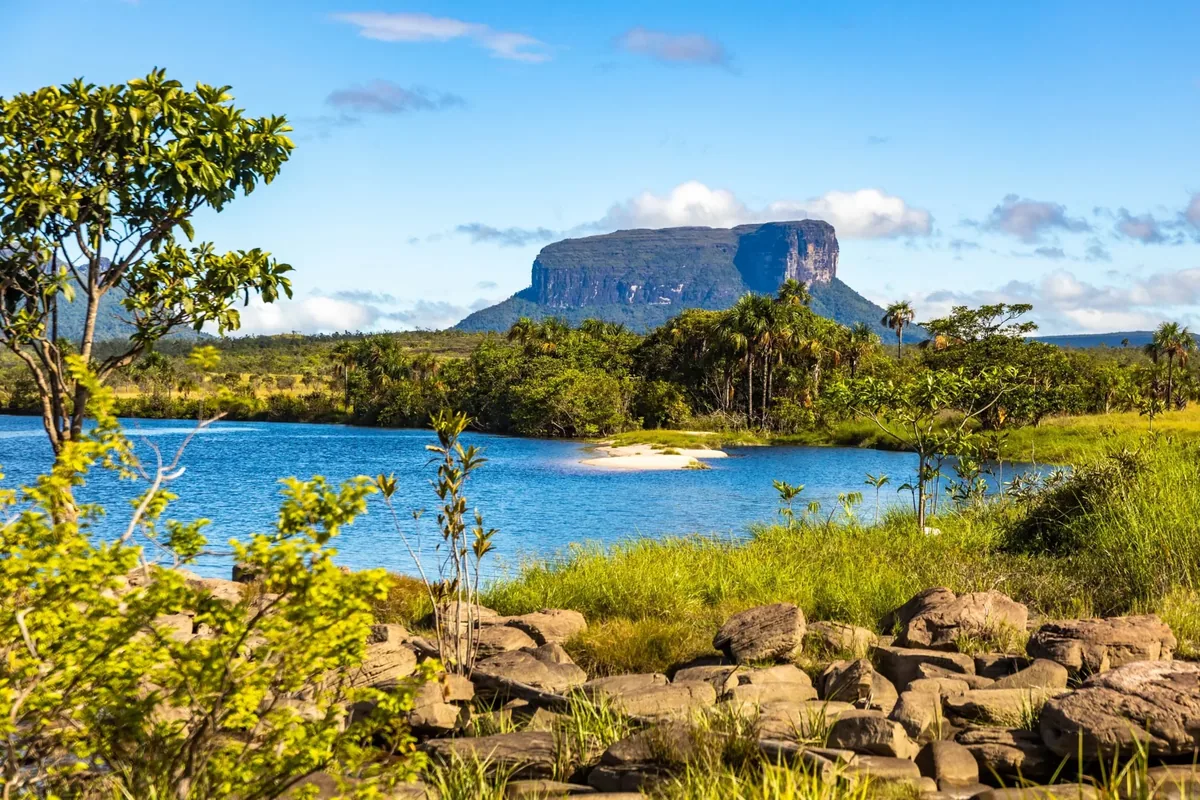
Is every Venezuela rainforest destination part of the Amazon?
No. A country name, a forest biome and a river basin describe different things. UNESCO identifies a connection between the Orinoco and Amazon basins through the Casiquiare, while Canaima is known for tepuis and waterfalls. Start with the actual place and waterway. Current travel advice and site access must then be checked separately from geography.
Choose your base
Compare the places and routes
Canaima: tepuis, waterfalls and landscape research
Explore the landscape and organize your questions before considering a journey. Canaima is defined by tepuis, cliffs and waterfalls. This guide supports research and does not offer a confirmed itinerary.
Explore the guideOrinoco Delta: waterways, forests and research
Explore the landscape and organize your questions before considering a journey. The Orinoco Delta brings together river, forest and coastal habitats. This guide supports research and does not offer a confirmed itinerary.
Explore the guide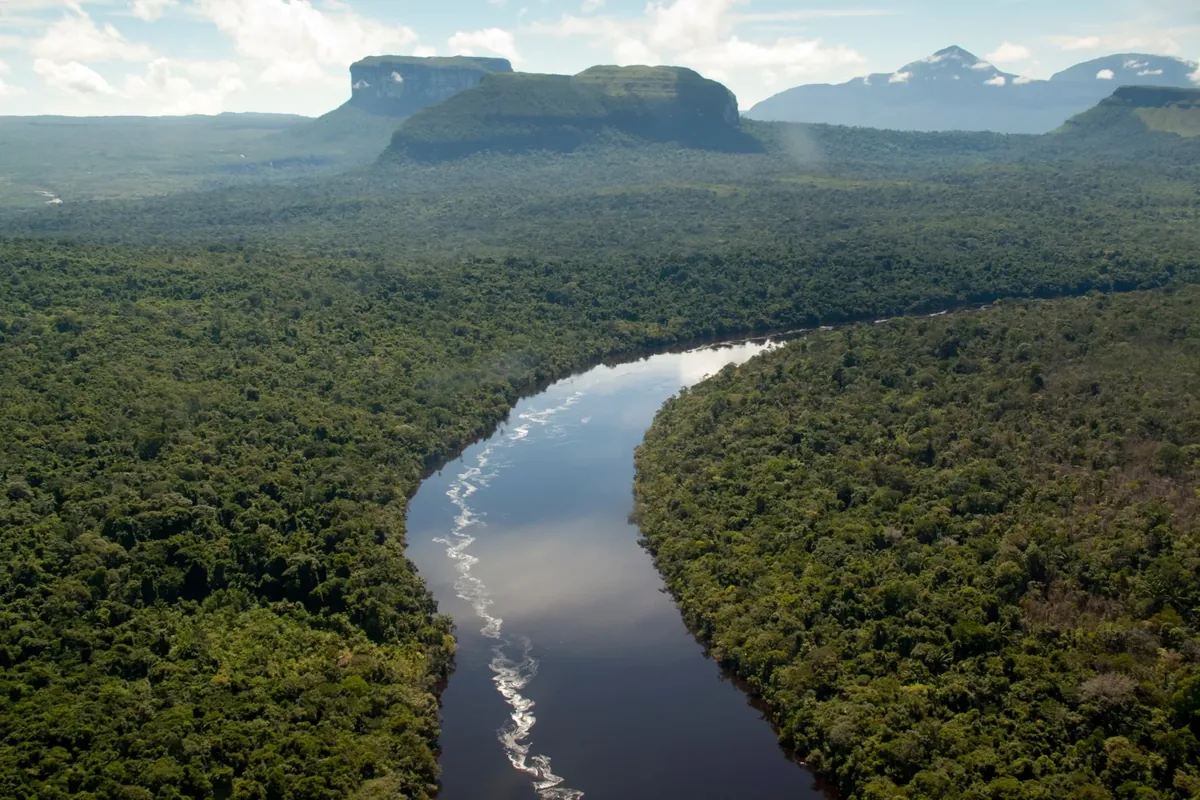
Read the map before choosing the experience
A useful Venezuela rainforest brief begins with a place name, not simply the word Amazon. Separate the country, the protected area and the river system on your map. UNESCO describes the Casiquiare as a connection between the Orinoco and Amazon basins. That relationship does not make every Venezuelan river, forest or waterfall an Amazon River destination. Keeping these terms distinct makes it easier to understand photographs, descriptions and proposed routes.
Use three columns when comparing places: landscape, purpose and unresolved questions. Put river scenery, forest observation or tepui views in the first column; explain what you want to learn or experience in the second. The third should record the evidence you still need about advice, access and arrangements. Our trip-planning guide turns that comparison into a practical brief without treating a place on the map as an available journey.
Canaima: tepuis, cliffs and waterfalls
UNESCO describes Canaima National Park in southeastern Venezuela as a landscape of table mountains called tepuis, steep cliffs and waterfalls. Those features give it a different visual identity from a journey described only as lowland forest or river travel. If tepui scenery is your main interest, name that interest explicitly rather than requesting a generic Amazon tour and assuming the same experience will follow.
A landscape description cannot tell you which viewpoint, approach or activity would be accessible on particular dates. Keep photographs and conservation information separate from operational questions. Ask what exact area a proposed description refers to, what evidence supports the image location and which arrangements would need confirmation. We do not present Canaima’s heritage status as permission to visit or as a promise of current tourism services.
Alto Orinoco-Casiquiare: geography with an access boundary
The Alto Orinoco-Casiquiare Biosphere Reserve is important to understanding Venezuela’s river geography. UNESCO describes Orinoco headwaters and the interconnection with the Amazon basin in this area. Its listing also states that tourism is not allowed in the reserve. That is a specific site statement, distinct from a government’s travel advice, and it prevents us from presenting the reserve as a bookable sightseeing route.
Read the reserve as a conservation and geographical reference. An appealing river image or a historical account is not evidence of visitor access. If you encounter an advertised itinerary using this name, establish whether it actually enters the reserve and ask the relevant authority about the applicable rules. Do not infer an exemption from a guide’s availability, an online price or the fact that another traveler once visited.
The Orinoco Delta has its own identity
UNESCO describes the Delta del Orinoco as a mosaic that includes mangroves, swamp forest, moist forest and aquatic environments. This is a different geographical context from Canaima’s tepui landscape. A delta photograph, forest walk and mountain viewpoint should therefore not be interchangeable promises in a travel description. Compare the exact setting and the activity being discussed, keeping conservation information separate from a claim of visitor access.
For river-oriented research, write down what interests you: observing the changing landscape from a boat, learning about waterways or understanding the relationship between water and forest. Then ask where those interests would be addressed and what is still unverified. An itinerary needs named stops and a clear access basis; a broad regional label alone is not enough to evaluate the experience or its suitability.
Wildlife interests: habitat before a sightings list
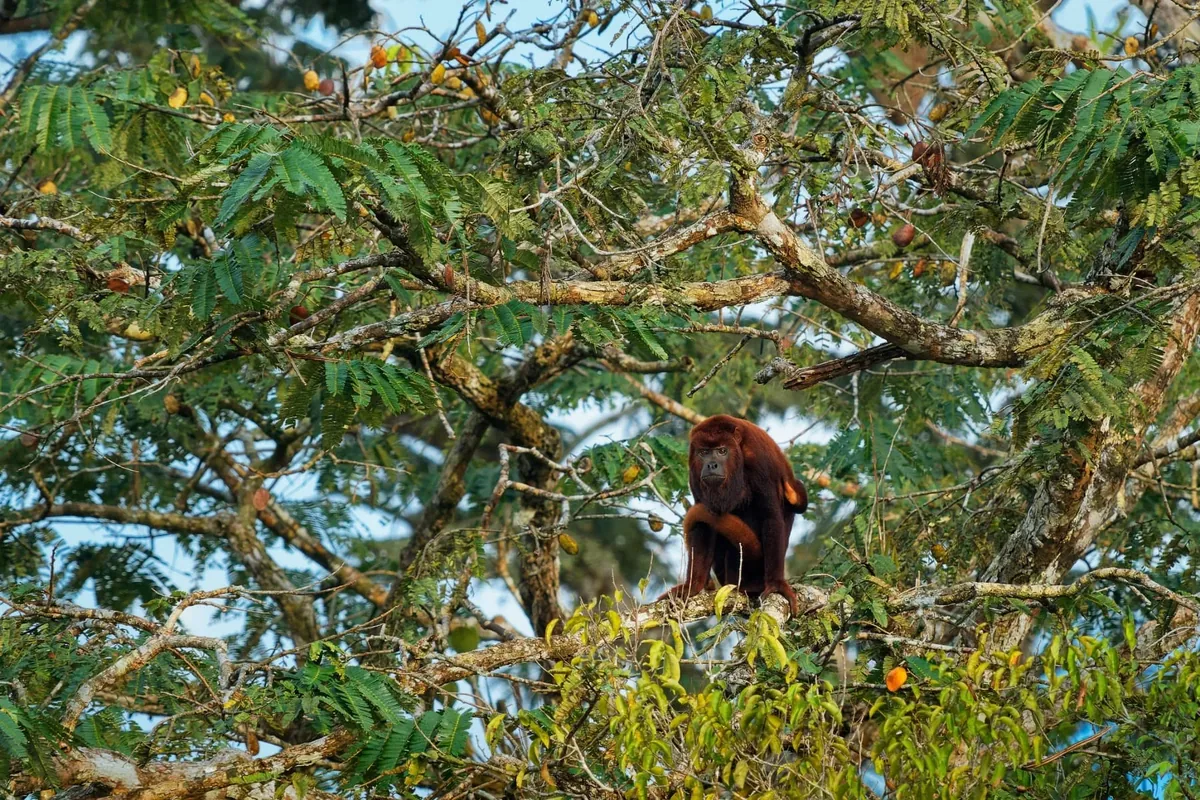
If wildlife motivates your research, describe the observation style you enjoy rather than assembling a list of guaranteed animals. Are you interested in birds, forest sounds, river habitats or photography? A useful brief explains your patience, walking comfort and willingness to spend time in one setting. The presence of an animal in a conservation inventory does not mean a visitor can access its habitat or expect to see it.
Ask what supports any wildlife claim: the exact habitat, the date of the observation and the context in which it was recorded. Distinguish an illustrative photograph from a verified local sighting. Avoid using a dramatic image as a reason to accept an otherwise unclear route. You can also compare Peru rainforest planning if your priority is understanding how habitat, guiding and time shape a different country’s proposed journey.
People and places deserve more than a tour label
A community name is not an invitation, and a cultural photograph is not a scheduled experience. If a future proposal includes a hosted visit, the questions should begin with who has invited visitors, who makes the arrangements and what the hosts wish to share. Ask about photography, interpretation, group size and payment before assuming that any interaction is part of a package.
Keep consent separate from access and commercial availability. A provider should be able to explain each of those issues without treating people as an attraction added to a route. If the arrangement is unconfirmed, leave it out of the promised itinerary. This principle also helps you assess older articles: an account of somebody’s past visit does not establish a standing invitation for future guests.
Current advice comes before itinerary design
The FCDO categories are travel advice from the UK government, not a statement that all movement is legally prohibited. The detailed regional page and map identify areas with different advice. Read them alongside the guidance issued for your nationality and circumstances. A destination’s natural significance does not reduce the importance of those checks, and a provider’s willingness to discuss a trip does not settle them.
If your aim is a leisure rainforest holiday, postponement or comparison with another country may be the more appropriate next step under the current advice. Avoid paying simply to preserve an idea while basic feasibility remains unresolved. Our Ecuador rainforest guide offers another geographical comparison; read its own planning and safety information rather than assuming that every alternative automatically suits your circumstances.
Compare the complete journey, not an attractive headline
When future conditions allow a proposal to be considered, request the complete sequence: arrival point, transfers, overnight bases, activities and departure connection. Ask which services are confirmed, which depend on conditions and who is responsible for each handover. The number of nights at a destination is more useful than a headline trip length that hides long periods in transit.
Accommodation descriptions should answer your own priorities: room arrangement, meals, bathroom facilities, electricity, communication and walking demands. Treat those as questions for the named property, not assumptions about all rainforest accommodation. Your trip-planning guide provides a checklist for comparing written answers and deciding which uncertainties would change your decision. A shorter, clearly described idea is more useful than an ambitious route built around missing details.
Turn your interest into a clear research brief
A good brief states the landscape you want to understand, the proposed timing, who would travel and the practical limits that matter. Explain whether you prefer river scenery, walking, photography or time at one base. Include concerns about boat travel, mobility, dietary needs or communication. Do not share sensitive medical details in an initial inquiry; describe the practical requirement that needs discussion.
Finish with your unanswered questions and the conditions that would make you postpone. This keeps the conversation focused on evidence instead of an automatic quotation. If you are still choosing a country, compare the Brazil rainforest guide with the Ecuador and Peru guides. Choose by the actual landscape and a workable proposal, then revisit current advice before any booking decision.
Planning questions
Is Venezuela’s rainforest the same as Canaima?
No. Canaima is a specific national park known for tepuis, cliffs and waterfalls. Venezuela’s forest and river geography also includes other regions. Identify the exact place instead of using those names interchangeably.
Can I book tourism in Alto Orinoco-Casiquiare?
UNESCO’s reserve listing states that tourism is not allowed. We use it as a geographical and conservation reference, not a bookable tourism product.
Does this page mean travel is currently recommended?
No. Read the current UK advice and your own government’s guidance. Geography, legal access, insurance and available services are separate questions.
What should I include in a Venezuela inquiry?
Name the landscape that interests you, your approximate timing, group size and practical priorities. Explain what is still uncertain. An inquiry is a research conversation, not a confirmation of access, availability or a booking.
Have a question about Venezuela’s rainforest?
Tell us which landscape interests you and whether you are researching a future journey or comparing another country. We can discuss the questions to investigate. An inquiry does not establish that travel is advisable, access is permitted or services are available.
Discuss your researchSources & scope
Reviewed October 8, 2026. Informational research and planning guidance; no current availability or visitor-access assurance. Licensed photographs illustrate the subjects described; captions identify recognizable landmarks and distinguish other scenes from verified sites or bookable properties.