
VENEZUELA RAINFOREST
When to visit Venezuela’s rainforest: compare the conditions
Choose a useful date range by comparing the named destination, your interests and the practical conditions behind the proposed journey.
Ask a research question
AT A GLANCE
Where should you start?
Start with the destination and the activity. Separate historical seasonal patterns, current conditions and confirmed availability.
Begin with a place and a purpose
There is no single best month that answers every Venezuela rainforest travel question. First identify the named destination, the activities you want and the amount of time you can keep flexible. A preference for photography, time beside a river or walking needs a different conversation from a request for the lowest advertised price. The Venezuela rainforest overview helps distinguish the landscapes covered here before you start comparing dates.
Use the Venezuela trip-planning guide to assess the journey in its current context. At this review, UK FCDO advises against all travel in specified areas and all but essential travel elsewhere in Venezuela. A favourable weather period does not resolve that advice, insurance eligibility or access. Treat choosing dates as one part of a researched decision, not as evidence that a journey is appropriate or available.
Read seasonal labels at the destination scale
A label such as wet season or dry season is only useful if the description explains the place, the measure and the period it refers to. Ask whether a statement concerns average rainfall, recent river conditions or a provider’s experience with a particular activity. Those are different kinds of information. A national summary should not quietly become a prediction for a forest base or a river landing on a particular day.
Use dated destination information when comparing possible months, and distinguish historical patterns from a forecast. A seasonal pattern can help organize questions; it cannot promise dry afternoons or an uninterrupted transfer. Ask what would change in the proposal if conditions differed from the usual pattern. That answer is often more useful than an optimistic season label because it describes how the actual journey would be managed.
Compare Canaima and delta questions separately
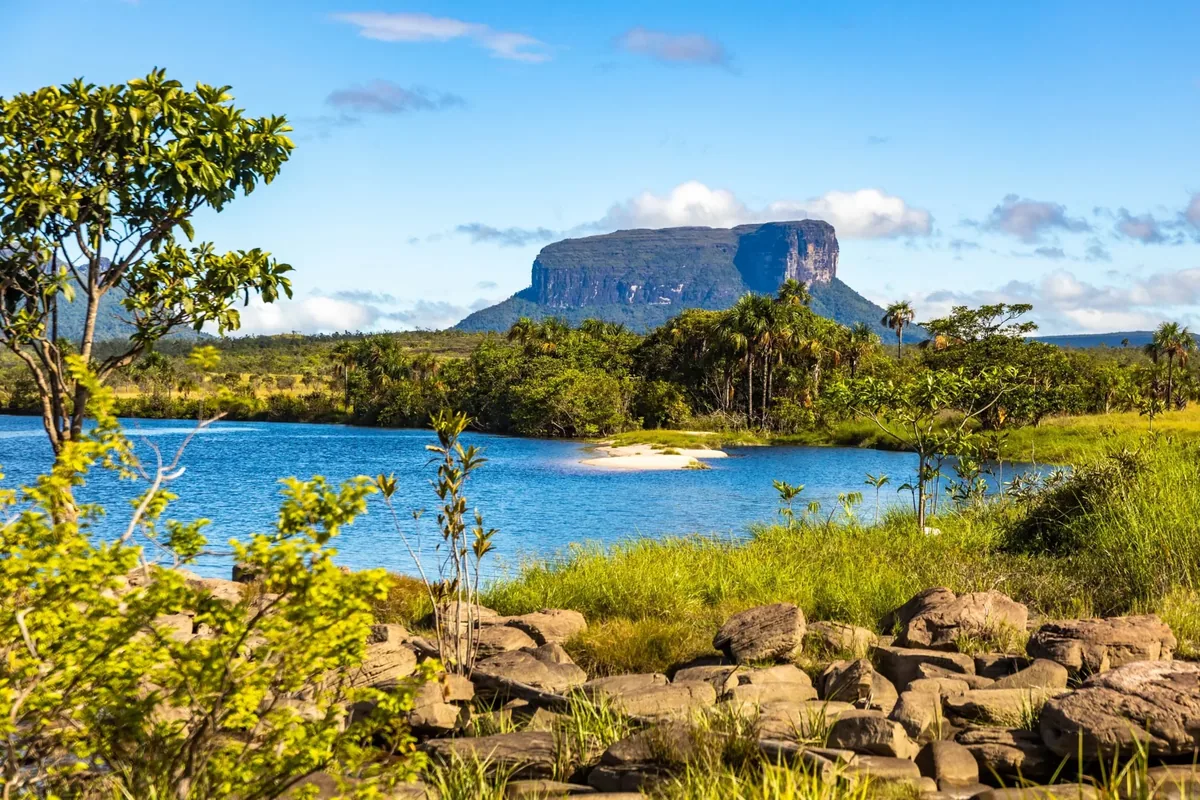
The Canaima guide and the Orinoco Delta guide describe different landscapes. Do not apply a statement about a waterfall excursion to a delta journey without checking its relevance. For a proposed Canaima activity, ask about the specific site and mode of access being considered. For a river or delta proposal, ask about the named channels, boarding points and the base from which activities would begin.
Keep the geographic description separate from the operational answer. A place may be interesting in a photograph while a particular activity requires further verification. Ask who supplied the seasonal information, when it was checked and which exact excursion it supports. A provider should be able to explain the scope of a claim; a broad country label and an attractive image cannot establish conditions across every possible route.
Ask how water conditions affect the activity
For any river-based proposal, ask what water conditions mean for the specific boat journey, landing point and walking opportunities. Request the provider’s explanation of the conditions under which an activity changes or cannot proceed. Do not infer a safe operating level from a scenic photograph or a general comment that there is more or less water. Keep the decision with the responsible operator rather than turning a seasonal observation into your own operating rule.
Write down the alternatives offered if the intended activity cannot happen, and whether those alternatives are included in the same price. Ask whether the change affects the accommodation base, transfer duration or the number of usable days at the destination. These are comparison questions, not confirmation that alternative services exist. An itinerary should describe the practical consequences of changing conditions without guaranteeing that nature follows a planned schedule.
Choose wildlife time around observation, not guarantees
The wildlife guide explains why a species record is different from a promised encounter. When choosing dates, ask what habitat and observation style the proposal includes rather than seeking a month that guarantees a particular animal. Identify whether your interest is general observation, a specific photographic subject or learning from a guide. That helps a provider explain the limits of what can reasonably be discussed.
Ask how much time is allocated to observation and how the plan responds to weather or an unsuccessful outing. Repeating an activity, changing its timing or visiting another habitat can only be assessed when those options are actually described. Avoid buying a date range on the strength of a guaranteed sighting. A thoughtful schedule allows time for patient observation while accepting that the outcome remains uncertain.
Allow realistic time for getting there and returning
Our getting-there guide separates international arrival from onward transport and the final handover to a base. Build those stages into your date comparison. A stay advertised as three nights does not necessarily provide three full days for your interests once transfers are accounted for. Compare arrival and departure times, intermediate nights and the return connection rather than simply comparing the number of nights on a quotation.
Ask which legs are confirmed and which still depend on a current service check. Identify who is responsible if an earlier connection changes and how separate bookings are affected. Keep some flexibility where the actual arrangement requires it, but obtain a concrete explanation rather than adding an arbitrary buffer. We do not prescribe a universal number of connection days or publish transport schedules as part of this guide.
Compare dates with written accommodation details
The rainforest accommodation guide helps you compare the room arrangement, essential facilities and written inclusions. Ask whether the proposed dates refer to a confirmed available room or an exploratory quotation. Check how an arrival-night stay, a changed transfer or an additional night would be handled. A seasonal price label is not enough to understand the total cost or the practical arrangement.
Compare the terms for the same room type, party size and included services. Identify payment deadlines, change conditions and any costs that would remain payable if an activity changed. Do not assume that a flexible international ticket makes accommodation equally flexible. Keeping each supplier’s terms visible helps you assess the financial implications of the date range instead of discovering them after a schedule change.
Prepare for the conditions actually described
Use the packing guide after the proposed route and luggage limits have been clarified. Ask about the clothing and footwear suitable for the activities under discussion, what equipment is supplied and what can be stored at the base. Check the forecast for the named destination closer to departure, and revise preparations if the itinerary changes. A countrywide best-time article cannot select your complete equipment list.
Tell the provider about needs that affect time outdoors, boarding or walking, rather than assuming a seasonal label addresses them. If your priority is a gentler pace, shorter outings or additional rest, explain that explicitly. Discuss personal health questions with a qualified professional. The relevant preparation is the one matched to your actual circumstances and the agreed activities, not a generic promise that one month suits everybody.
Send a date range with clear priorities
A useful timing inquiry states your earliest and latest possible dates, approximate trip length, party size and the interests you want to prioritize. Identify fixed flights or other commitments and say how much flexibility you have. Add the named destination if known; otherwise explain the landscape or observation style that interests you. This gives the conversation enough detail to compare realistic options instead of returning a generic season recommendation.
Ask the response to distinguish historical seasonal information, current conditions and confirmed availability. Record when each piece of information was checked and what still needs updating before a commitment. If the important questions remain unanswered, keep the plan provisional. The purpose of comparing dates is to understand the trade-offs clearly; an inquiry does not establish a reservation or guarantee weather, wildlife or operating conditions.
Planning questions
Is there one best month for every destination?
No. Compare the named place and activity, historical seasonal information, current conditions and actual availability separately.
Does a dry-season label guarantee clear weather?
No. A seasonal pattern is not a forecast for a particular day or a promise that every activity will operate.
Can dates guarantee a wildlife sighting?
No. Ask about habitats, observation time and activity arrangements without treating a species record as a promised encounter.
What should a timing inquiry include?
Include your earliest and latest dates, trip length, party size, preferred destination, priority activities and any fixed commitments.
Share the priorities behind your plan
Tell us which conditions or visitor practices matter to you, alongside your destination interests and tentative dates. Your inquiry starts a discussion, not a reservation.
Discuss your researchVenezuela overview · Trip-planning guide · Canaima · Orinoco Delta · Wildlife & habitats · Compare accommodation · Getting there · Packing list · Responsible travel · Trip costs · Itinerary planning
Sources & scope
Reviewed October 9, 2026. Research and comparison guidance, not a confirmed itinerary, seasonal forecast or provider certification. UK FCDO advises against all travel in specified areas and all but essential travel elsewhere in Venezuela. Review the full current advice relevant to your circumstances before a commitment. Licensed photographs illustrate the subjects described; captions identify recognizable landmarks and distinguish other scenes from verified sites or bookable properties.