
Choose when to travel
Compare Tambopata and Pacaya Samiria seasonal guidance with your named route and available time.
PERUVIAN AMAZON
Follow the changing landscapes of southeastern Peru. Make room for forest observation, river scenery and a route that respects the places and people it passes.
Plan this journey
AT A GLANCE
Manu National Park spans Cusco and Madre de Dios, protecting landscapes from high Andean terrain to lowland Amazon forest. A trip sold as “Manu” may cover only part of that wider setting. Choose the named visitor route and overnight bases before deciding how many days to reserve.
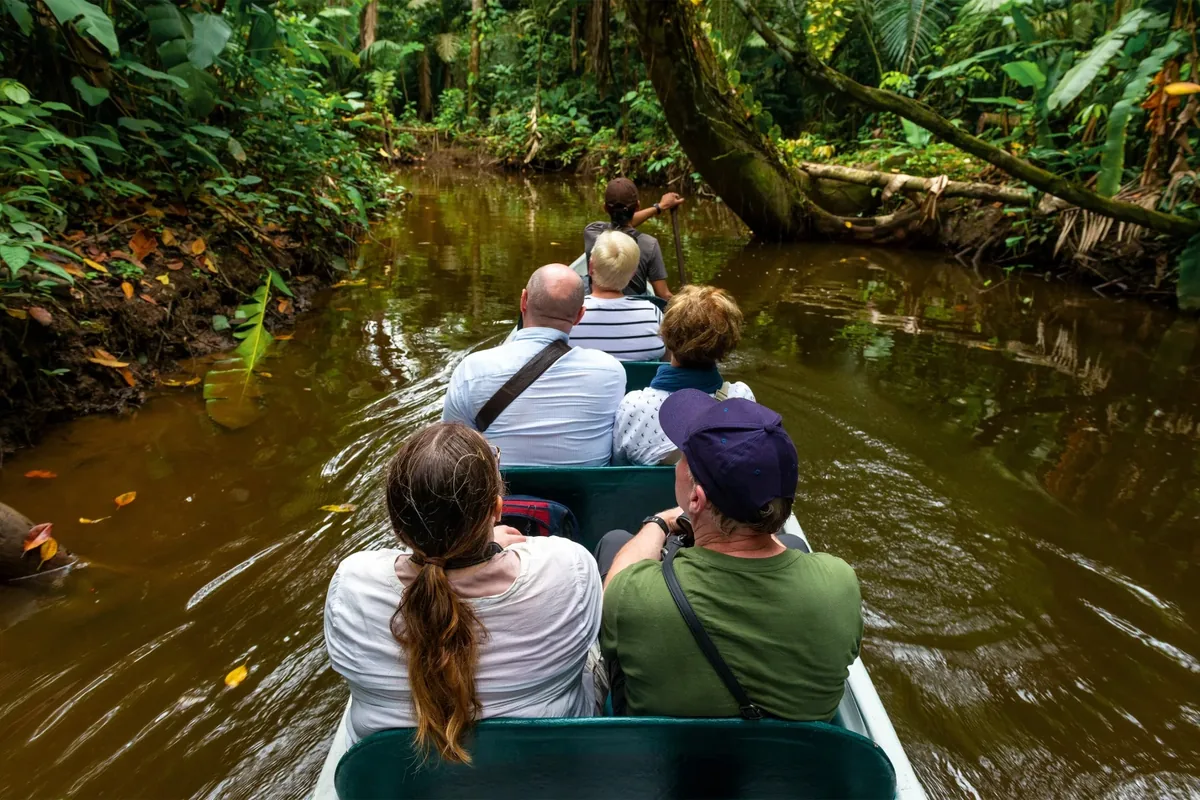
PROMPERÚ describes Manu as a protected landscape extending from high Andean environments to the tropical lowlands. This is the central reason to consider it: the journey can be about the transition between habitats as well as the time spent in one forest setting. It is worth deciding which part of that transition interests you most.
A mountain-forest photograph and a river photograph can both illustrate Manu, yet they do not describe the same outing. Put each desired setting beside a named stop in your proposal. A route that concentrates on the upper landscape should not be compared with a lowland journey as though the two deliver identical experiences.
The national park, the wider Manu landscape and the places included in a commercial itinerary are not interchangeable labels. Ask the organizer to identify the visitor circuit, entry points and overnight locations on a map. If a proposal uses terms such as cultural zone or reserved zone, request a clear explanation of what those terms mean for that specific journey.
PROMPERÚ directs visitors to agencies authorized by SERNANP. Confirm authorization for the actual park visit and the arrangements for entry before paying. Do not assume that a lodge with Manu in its name is inside the park, or that every advertised excursion enters it. A precise route makes the experience easier to assess.
Think of travel between landscapes as part of the itinerary, not as invisible time between activities. A road-and-river proposal needs a clear sequence of journeys, stops and nights. Ask where you will board, where baggage stays during outings and how the return connects with your next reservation.
If you prefer fewer moves, tell the planner early. Repeated outings from one base can suit a different travel style from a journey through several settings. Neither format is automatically better: choose the balance between changing scenery, forest time and daily comfort that you would enjoy.
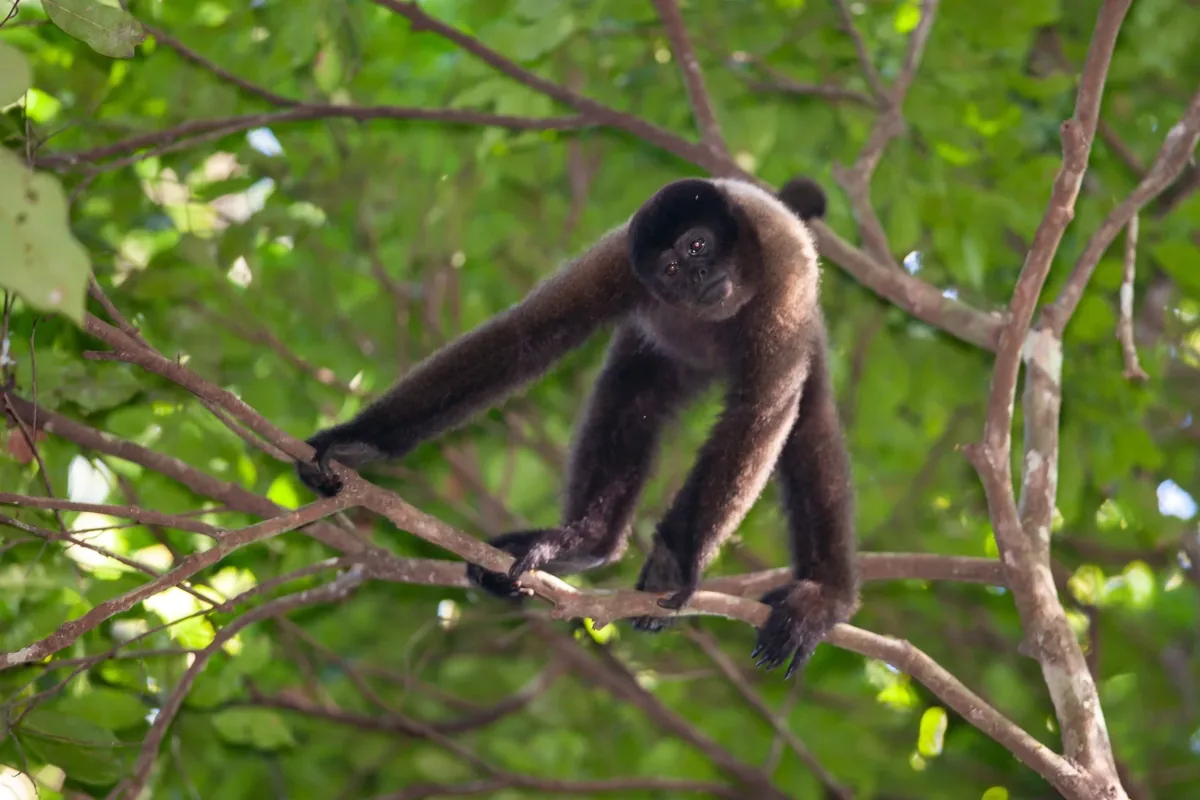
A quiet pause on a trail can be more useful than another rushed stop. Give your guide a clear sense of your interests: birds, mammals, plants, photography or an introduction to the forest. Ask how the route creates opportunities to observe those interests, rather than requesting a checklist of promised animals.
The howler monkey photograph records one moment in Manu; it is not a prediction for your visit. Keep distance, follow the guide and avoid feeding or drawing animals closer for a picture. For photography, discuss how much time you can spend in one place and whether that pace works for the rest of the group.
There is no single useful minimum for every Manu route. Start by separating arrival, onward travel, exploration and return. Count the full mornings or afternoons in the setting you care about, rather than using the advertised number of days alone. A longer title on a package does not necessarily mean more observation time.
For a shorter window, choose a narrower route instead of adding every habitat. For a longer window, consider whether an extra night would give you another outing from the same base or simply add another move. Keep enough flexibility around onward bookings for the arrangements confirmed by your organizer.
Compare the actual accommodation at each overnight stop. Ask about sleeping arrangements, bathrooms, meals, charging and communications where those details matter to your group. A photograph of one room cannot describe every night on a moving itinerary. Put essential requirements in writing before selecting a route.
Walking surfaces, boarding boats and carrying baggage can be as important as room comfort. Explain mobility needs and the activity level you enjoy. Request details for each stage rather than accepting a general description such as easy or adventurous. The aim is a journey you can participate in comfortably.
Use the named route to ask seasonal questions. Roads, landings and walking conditions can affect how a journey is organized; the relevant answer is how the organizer plans your specific stops for your dates. Request the alternatives if one activity changes, and distinguish those alternatives from a refund or cancellation policy.
Keep current travel advice and personal travel-health questions separate from this destination guide. Review official advice before booking and again before departure, and seek qualified advice for individual needs. This page explains route choices; it does not provide current operational clearance or a health assessment.
Manu is also a cultural landscape. Do not treat a community encounter as an attraction that any itinerary can add on demand. If a host-led visit is proposed, ask who invites the group, what the visit includes and how the host community benefits. Photography should follow the preferences of the people involved.
Respect any places that are closed to visitors and follow the authorized route. Leave room for interpretation of the landscape without assuming that every cultural detail is yours to photograph or share. A thoughtful visit values the boundaries that protect both people and habitat.
If the changing mountain-to-lowland landscape is your main interest, Manu deserves a closer route discussion. If you want a lake or clay-lick focus, compare the specific Tambopata sectors. If river journeys or white-sand forest are your priority, look at Iquitos and Loreto instead of choosing by the Amazon label alone.
Travel format matters as much as region. Compare settled stays with moving journeys, and compare the exploration time after all transfers are counted. Our regional guide puts these choices side by side; the trip-planning guide helps turn your preferred option into a clear inquiry.
Do not assume it does. Ask for the named circuit, park entry arrangements and the location of each overnight base. A journey in the wider Manu landscape may have a different scope from a park visit.
Make both settings explicit in your request. Their inclusion depends on the chosen route, time and access arrangements; this guide does not offer a fixed combined itinerary.
No. It is a documented photograph from Manu. Choose suitable habitat, guiding and time for observation, while treating any sighting as a possibility.
Compare your main interest, the named visitor areas, nights at the base and complete transfers. Manu’s changing landscapes and a Tambopata lake or clay-lick route can create different journeys.
Share your dates, group, preferred landscapes and wider Peru route. We can begin with your priorities and work toward a clearly defined journey.
Share your plansPeru overview · Plan your journey · Iquitos & Loreto · Tambopata · Compare the regions
Regional facts reviewed October 7, 2026. Comparisons are editorial guidance; they do not confirm packages, availability or current conditions.
Choose the route and overnight format that support your priorities.
Compare Tambopata and Pacaya Samiria seasonal guidance with your named route and available time.
Connect birds, mammals and patient observation with the habitats you will visit.
Connect your gateway with the named route and confirm the return before booking onward travel.
Choose clothing and equipment for the actual stages and overnight setup, then check what is supplied.