
Gateway arrangements
Coordinate the arrival and river departure through Leticia.
COLOMBIAN AMAZON
Give this wetland outing time for observation and local interpretation. Compare a day visit from Leticia with staying upstream in Puerto Nariño, and confirm the actual boat experience.
Plan this journey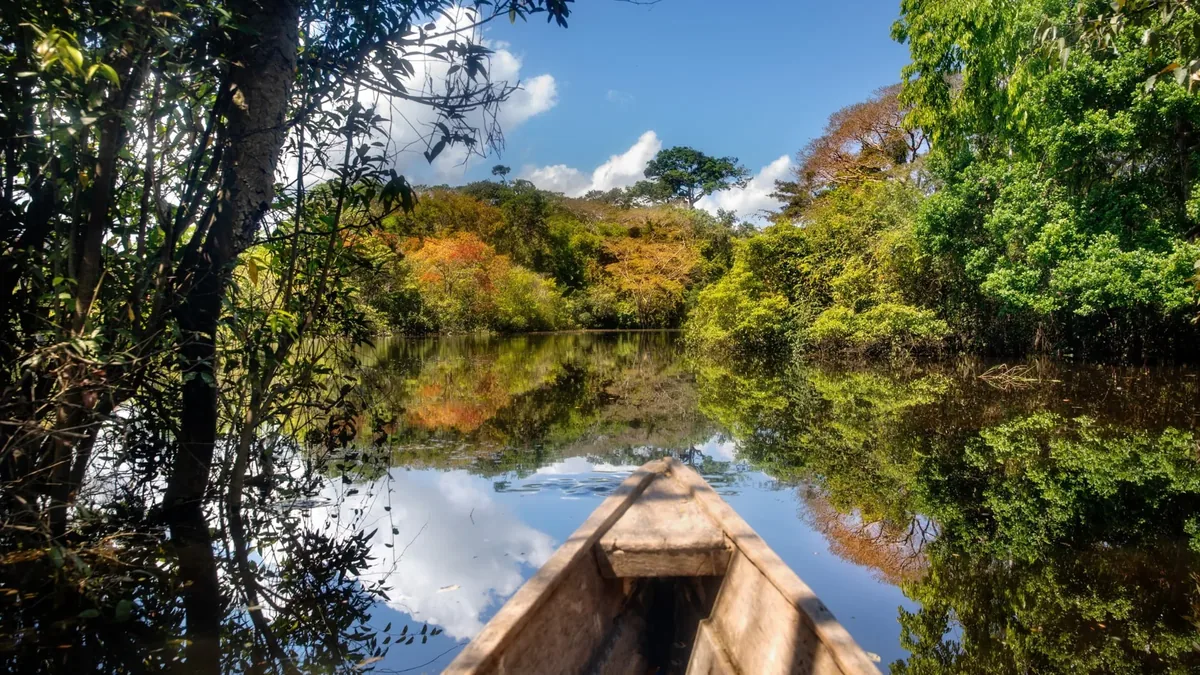
AT A GLANCE
These are the Colombian lakes near Puerto Nariño, not the Peruvian city of Tarapoto. Confirm the boat route, guiding and usable lake time; dolphin sightings cannot be guaranteed.
Coordinate the arrival and river departure through Leticia.
Compare the overnight rhythm in Puerto Nariño.
Balance wetland observation and forest interpretation.
The Tarapoto lakes near Puerto Nariño belong to a wetland landscape in Colombia’s Amazonas department. They should not be confused with the city of Tarapoto in Peru. Colombia’s tourism board describes the lake outing as a boat journey from Puerto Nariño. Start by identifying that base and the proposed route so searches, accommodation bookings and transport enquiries all refer to the same Colombian destination.
The Colombia overview helps place the lakes within an Amazon journey through Leticia and Puerto Nariño. Treat Tarapoto as an experience with a purpose rather than an extra name on a checklist. Decide whether you want patient wildlife observation, landscape time or a gentler river outing. Those priorities determine how much time to allow and what questions to ask about the boat and guiding.
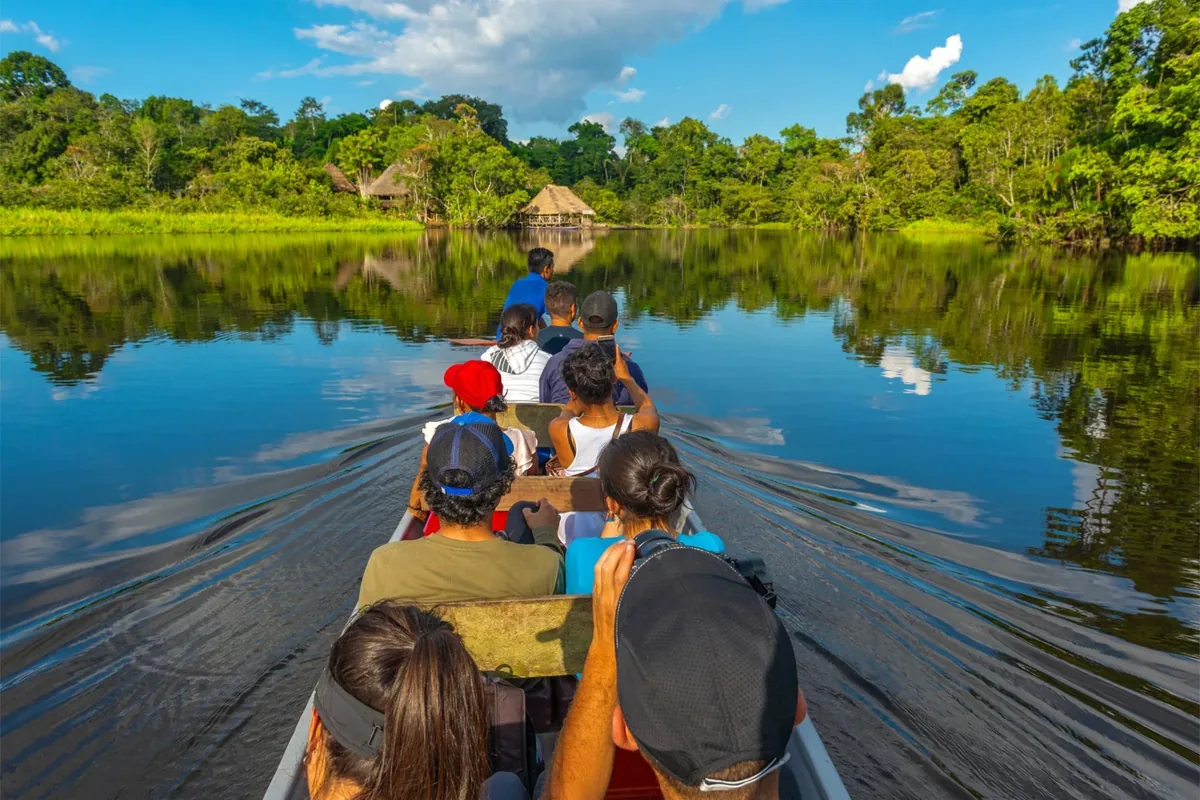
Colombia’s environment ministry describes Tarapoto as a Ramsar wetland and documents restoration work involving local communities in a December 2020 article. This is conservation context, not a current excursion offer. Approach the area as a living landscape rather than a wildlife stage. Ask how the proposed outing respects the access arrangements and local guidance for its route, without assuming that a designation makes every part of the wetland available to visitors.
Ask the guide to explain the connection between the lake, surrounding vegetation and river system. Interpretation can make a quiet outing rewarding even when animals remain distant or hidden. Notice changes in the shoreline, sounds and viewing perspectives rather than judging the entire visit by one photograph. Leave space for the guide’s knowledge and avoid assuming that every part of the wetland complex is a visitor route.
The Puerto Nariño guide explains the upstream base. For the lake outing, confirm where you meet the guide, how you reach the boat and where the trip returns. Ask whether the quoted excursion starts at your accommodation or at a landing you must reach independently. A short connection still needs a clear meeting point, especially when the group includes children or someone who needs boarding assistance.
If you are visiting from Leticia for the day, ask how much lake time remains after both gateway transfers. Compare that with an overnight upstream rather than assuming the two options provide the same experience. The relevant question is the useful observation period, not just whether Tarapoto appears in both itineraries. Confirm who coordinates the segments so a changed boat arrangement does not leave the group without a clear return.
Colombia’s tourism board identifies dolphin viewing among Tarapoto’s attractions. That describes an opportunity, not a guaranteed encounter on every departure. Ask how much time is devoted to observation and what the outing offers when dolphins are not visible. A satisfying plan includes the wetland setting and guiding, rather than depending entirely on a single species appearing close to the boat.
Discuss a respectful approach before setting out. Keep distance, follow the guide’s instructions and avoid pursuing, feeding or attempting to touch wildlife for a photograph. Choose patience over repeated changes of position simply to obtain a closer view. If observation is your main priority, tell the organizer so it can shape the pace; a packed schedule of short stops may not provide the time you want.
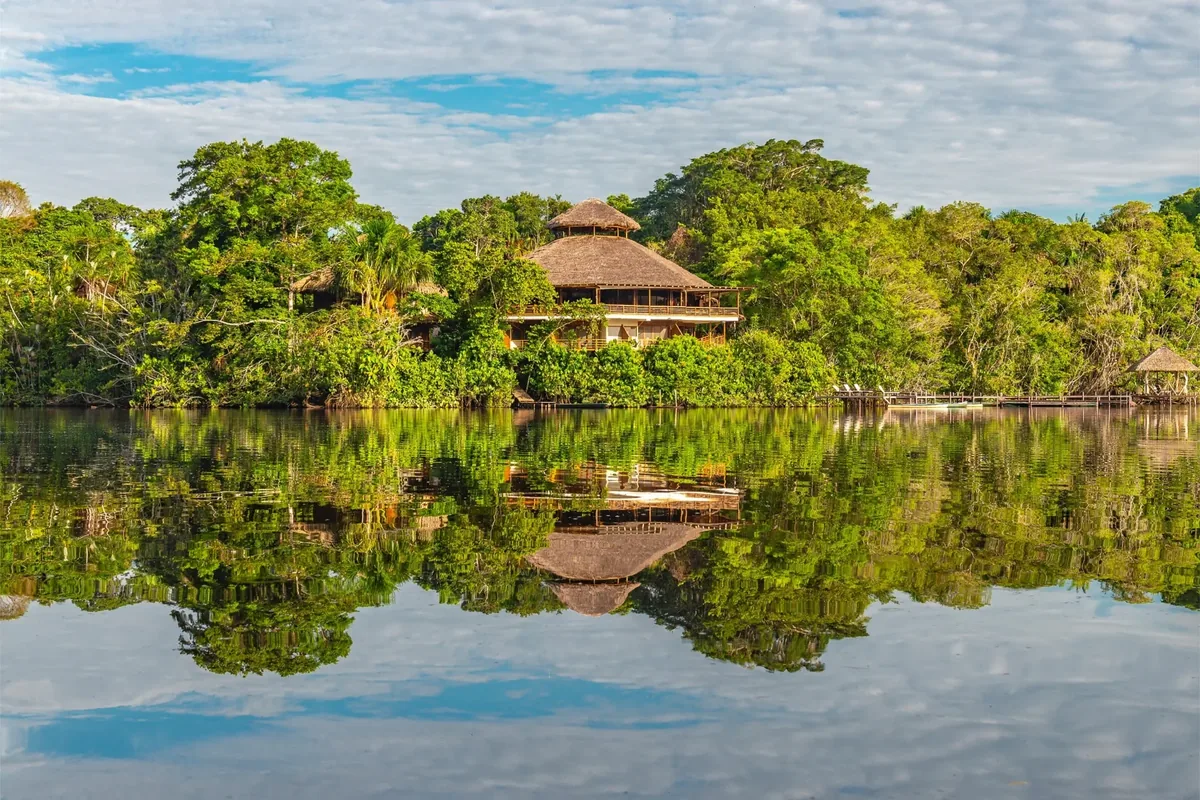
Ask which craft is proposed and what the journey involves. A canoe outing and a motorized transfer can create different rhythms, but availability and suitability depend on the route and conditions. Confirm seating, boarding, luggage and any equipment provided before booking. Do not assume a photograph establishes the boat you will use or that every traveler can comfortably participate in the same format.
Explain mobility needs and the group’s preferred pace early. Ask about shade or exposure, breaks and the duration away from the base. For children, clarify the arrangements offered for the planned craft and group. Choose the activity by the practical experience it provides, not by how adventurous a name sounds. If a different boat or route is needed, discuss its effect on the experience before accepting the change.
Water conditions can affect the outing’s route and the way the landscape is viewed. Ask the local organizer what is feasible for your dates and which alternatives it uses when the original plan is unsuitable. Avoid choosing a month from a generic promise that it guarantees the best wildlife. The meaningful answer describes the actual activity options and how they fit your priorities under current conditions.
Keep some flexibility in the daily sequence while making the important services clear. A photography-focused group may prefer a longer observation session to another stop; a family may need a shorter outing and a reliable break. Ask which decisions are made before travel and which are adjusted locally. Flexibility works best when it protects the desired experience, rather than concealing an itinerary that was never properly explained.
Tell the guide whether you want landscape images, birds, distant wildlife or simply time to watch. These interests can require different positions and amounts of waiting. Keep camera equipment manageable within the craft and ask how to protect it during boarding and rain. A larger kit is not automatically helpful if handling it distracts from the activity or makes the group’s movement awkward.
Do not make a close encounter the measure of success. Reflections, forest edges and the relationship between water and vegetation can provide a rewarding visual story. When people appear in photographs, seek permission and respect private spaces. Follow local guidance on any proposed use of drones rather than assuming that bringing one gives permission to fly. The outing should work for everyone sharing the boat, including those who are not photographers.
A proposal may combine Tarapoto with a community encounter or another stop. Ask what each component involves and whether it is agreed with the hosts. A lake excursion does not automatically include a cultural visit, a meal or access to private spaces. Decide whether the combination enriches the day or takes time away from the observation period you wanted when choosing the lakes.
For a wider nature-focused journey, compare the Amacayacu guide with the lake experience. A forest walk and a wetland outing can complement one another when each has enough time and an appropriate guide. Avoid merging them into a hurried sequence simply because both fit on a map. Request the transfer sequence and activity periods so the itinerary shows how the two settings provide different experiences.
Confirm the return landing, included services and the contact who communicates changes. If the lake visit ends before an onward boat journey to Leticia, have the whole connection reviewed. Keep luggage and pickup arrangements clear rather than assuming the accommodation, excursion guide and transfer provider will coordinate without an agreed plan. A practical ending lets the group enjoy the outing without worrying about an uncertain next step.
Send an inquiry with your dates, group size and whether you will stay in Puerto Nariño or visit from Leticia. Explain your main interest in the lakes and any mobility or boat preferences. Ask for the current total with guiding, transport and other inclusions identified. Compare the usable time and experience offered before deciding, and keep the wetland’s living landscape at the center of the plan. Use the best time to visit guide to relate your dates to the route, and the wildlife guide to choose the habitats and observation pace you value. Check the how to get there guide for arrival connections and the packing guide for belongings needed during the actual route.
No. This guide covers the Colombian Tarapoto lakes near Puerto Nariño in Amazonas. Use that base when planning accommodation and transport.
Confirm the actual pickup and boarding point with the provider. Puerto Nariño is the planning reference; a visit from Leticia also needs coordinated gateway transfers.
No. Allow time for observation and choose respectful distance. The wetland setting and interpretation remain part of the outing even without a sighting.
It is a planning option, subject to current availability and arrangements. Compare the transfer sequence and activity time so each setting has a clear purpose.
Share your dates, group size, preferred pace and practical needs. Tell us how this experience fits with the rest of your Colombian Amazon journey.
Share your plansColombia overview · Trip planning · Leticia · Puerto Nariño · Share your plans · Amacayacu · Accommodation · River journeys · Best time to visit · Wildlife · How to get there · Packing
Planning guidance reviewed October 8, 2026. Confirm current transport, community and park arrangements with the relevant providers and authorities. This guide does not confirm availability, prices or a booking.